Waterfront Landscaping Tips for Cedar Creek Lake Properties
Great lake landscaping does two jobs at once:
-
it makes your place feel like a resort, and
-
it protects the shoreline that holds your value.
At Cedar Creek Lake, the best waterfront yards aren’t the ones with the most plants — they’re the ones designed for erosion control, view protection, and low-maintenance lake life.
Here’s a practical, lake-specific guide to doing it right.
1) Start With the Truth: Your Shoreline Is a System
Your yard ends where the lake begins, but water doesn’t respect that line.
Wave action, fluctuating lake levels, and clay soils around Cedar Creek create a constant push-pull on the bank. Landscaping that ignores that reality causes:
-
soil loss
-
leaning trees
-
failing bulkheads
-
muddy waterlines
-
expensive fixes later
Landscaping that works with it protects your investment.
2) Control Erosion First, Beauty Second
If you’re waterfront, your #1 landscaping goal isn’t flowers — it’s bank stability.
What works best at Cedar Creek
-
Deep-rooted natives near the water
-
Layered planting (groundcover → shrubs → canopy)
-
Stone or gravel drip edges where runoff hits
-
Proper drainage away from the bank
What causes problems fast
-
bare soil edges
-
steep slopes with no root net
-
heavy irrigation pointed toward the lake
-
loose mulch right at the shoreline
-
lawn that runs all the way to the water
Rule: anything that lets water carry dirt into the lake will cost you later.
3) Use Native, Lake-Safe Plants (They’re Stronger + Easier)
Native plants handle:
-
drought
-
clay expansion
-
wet/dry swings
-
heat
-
minimal fertilizer
They also create a root web that naturally holds shoreline soil.
Great lake-safe categories
-
grasses and sedges for root matting
-
low shrubs for slope control
-
select shade trees set back from the edge
You don’t need a botanical list to win here — you need the right types in the right zones.
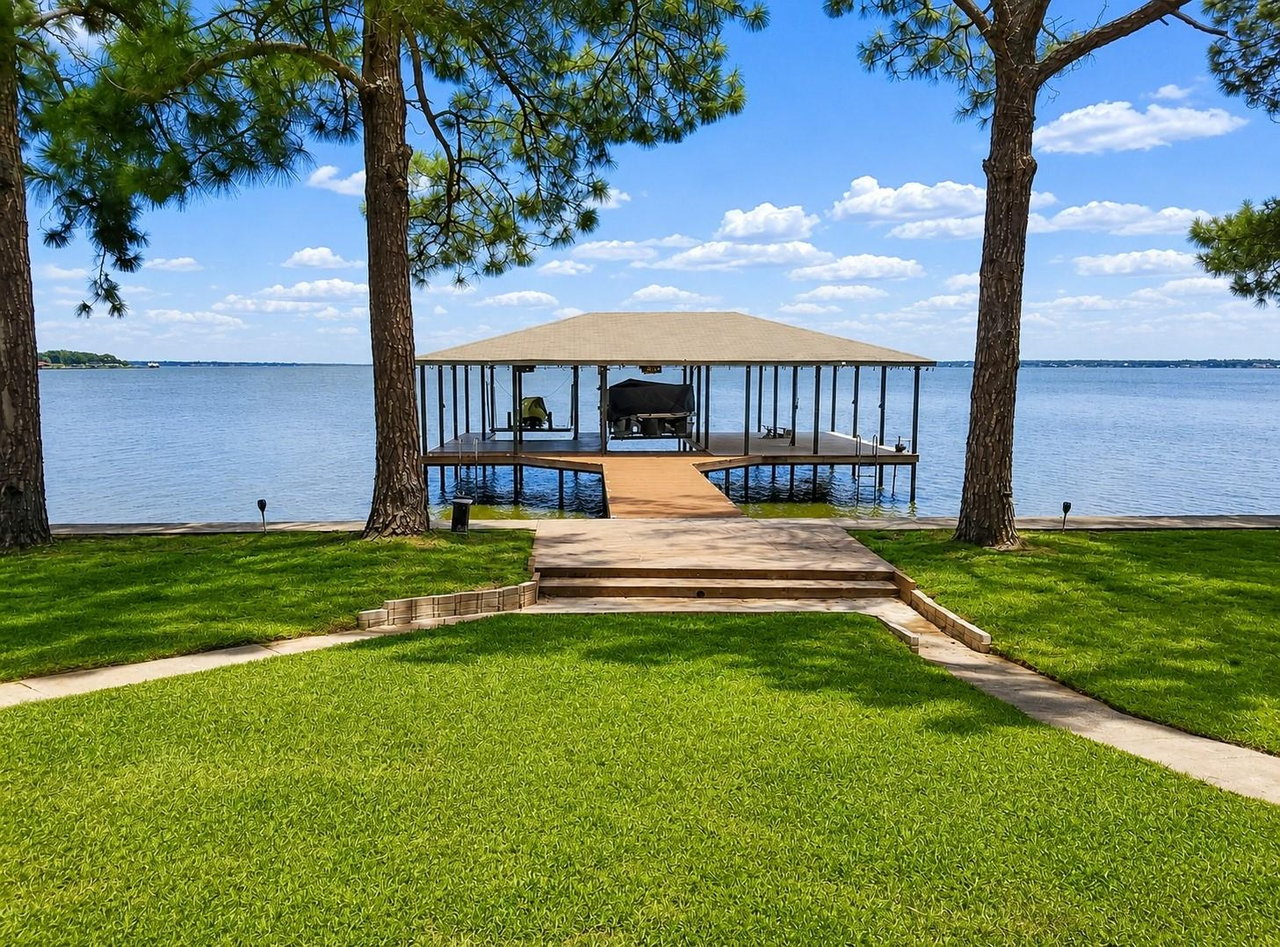
4) Protect Your View Corridors
At Cedar Creek, views sell homes.
Landscaping should frame the water, not block it.
That means:
-
keep tall plants off primary sightlines
-
trim strategically instead of “letting it grow wild”
-
choose lower varieties near decks, patios, and main-room windows
-
put taller trees to the side, not in front
Seller mindset:
Buyers pay premiums for unobstructed water views. Landscaping is either helping that premium or killing it.
5) Plan for Lake-Life Traffic
Waterfront yards aren’t “front yards.” They’re high-use outdoor living zones.
Design for:
-
golf carts and coolers moving to the dock
-
barefoot paths that don’t become mud
-
shaded hangout areas
-
easy rinse-off zones near entrances
-
durable surfaces that survive wet feet + sand + dogs + kids
Best materials for paths / edges
-
stone stepping pads
-
decomposed granite
-
concrete or pavers with drainage gaps
-
stabilized gravel
Avoid slick surfaces right near water access. Rentals especially need this.
6) Keep Maintenance Low (Because Lake Homes Should Feel Easy)
Lake homeowners don’t want a second full-time job.
Low-maintenance wins:
-
drought-tolerant beds
-
drip irrigation (not spray toward the lake)
-
defined mulch zones
-
minimal lawn footprint
-
slow-growth shrubs
-
hardscape in high-traffic zones
High-maintenance loses:
-
massive lawns to mow weekly
-
delicate flower beds right on the bank
-
aggressive irrigation
-
plants that shed constantly into the water
Tony Robbins principle:
Make it sustainable, or it won’t stay beautiful.
7) Be Smart With Trees
Trees are a blessing at Cedar Creek — until they become a shoreline risk.
Keep / plant trees when:
-
they’re set back from the edge
-
roots stabilize slope
-
canopy frames views without blocking them
-
they don’t lean toward water
Consider thinning or removal when:
-
large trees are directly on a crumbling bank
-
exposed roots are lifting soil
-
they block the main view corridor
-
they’re dead or storm-risk prone
A leaning, shoreline-edge tree is a future bulkhead repair waiting to happen.
8) Hardscape the Right Way (Don’t Smother the Bank)
Hardscape is great — in the right places.
Good hardscape:
-
stabilizes walkways
-
boosts outdoor living
-
reduces lawn maintenance
-
creates clean transitions to dock paths
Bad hardscape:
-
seals runoff into one spot (causes washouts)
-
adds weight to unstable slopes
-
creates slick zones by water
-
ignores drainage
Always grade hardscape so runoff drains away from the lake.
9) If You’re Selling, Landscape for Emotion
Cedar Creek buyers buy with feeling.
Simple staging wins:
-
clean shoreline edge
-
trimmed beds
-
defined paths to the dock
-
patio set up like “sunset ready”
-
view corridors opened
-
lights that make evenings feel magical
You’re not selling shrubs.
You’re selling the lake lifestyle story.
How We Guide Clients on Waterfront Landscaping
When Val McGilvra & Lis Arias walk a property, we look at landscaping like a value driver:
-
Is the shoreline protected?
-
Is drainage working?
-
Are view corridors open?
-
Does the yard feel easy to use and maintain?
-
Will this help or hurt appraisal and resale premium?
For sellers, we’ll tell you exactly what changes are worth doing before listing — and what’s just wasted money.
Bottom Line
The best Cedar Creek waterfront landscaping is:
-
erosion-smart
-
native-heavy
-
view-protective
-
low-maintenance
-
built for real lake life