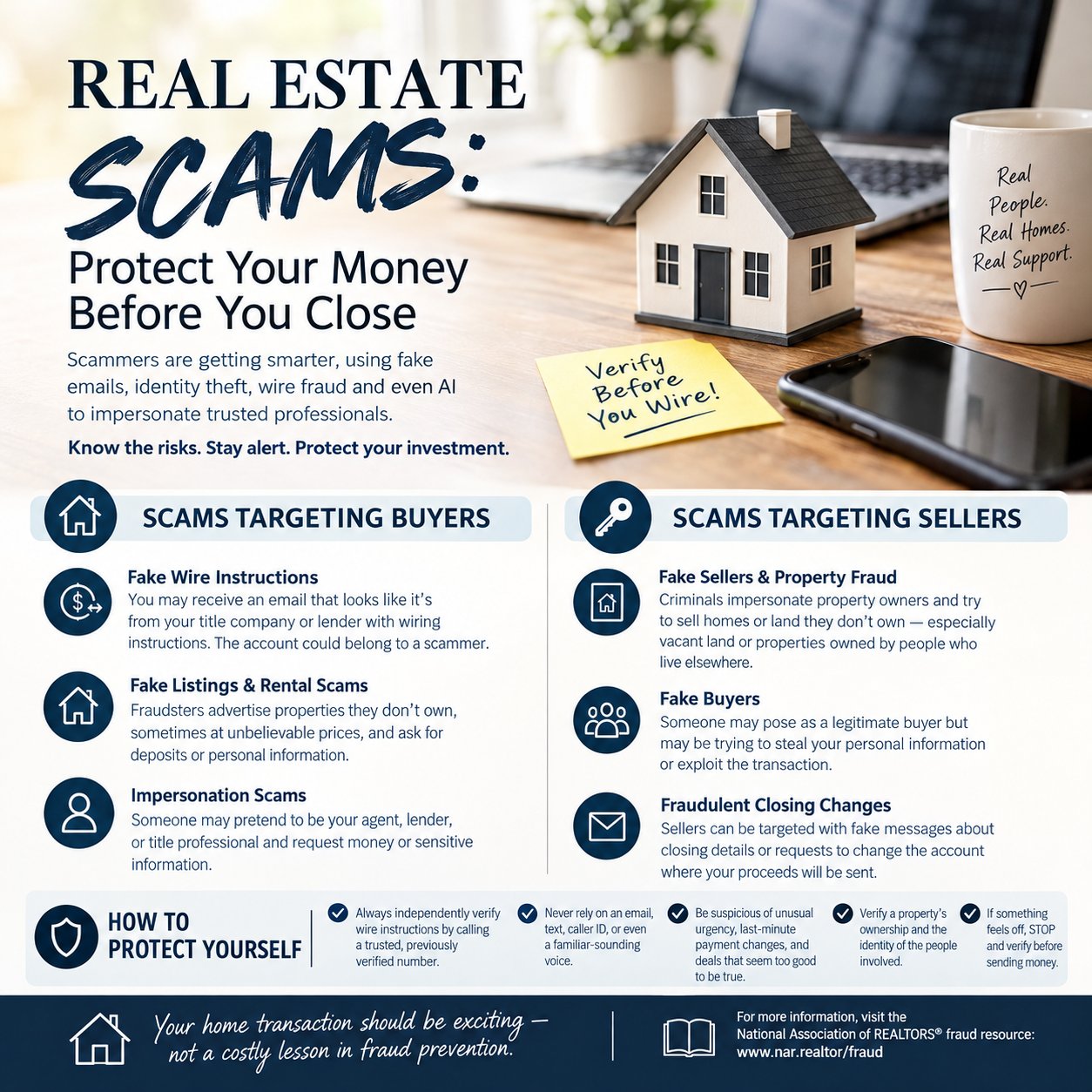
Real Estate Scams: What Buyers and Sellers Need to Know
Buying or selling a home is one of the biggest financial transactions most people make. Unfortunately, scammers are finding increasingly sophisticated ways to exploit the process. From fraudulent wire instructions to fake property owners and AI-powered impersonation, real estate fraud can affect buyers and sellers at nearly every stage of a transaction.
For anyone buying or selling a home around Cedar Creek Lake or elsewhere in East Texas, understanding these warning signs is an important part of protecting your investment.
Common Real Estate Scams Targeting Buyers
1. Real estate wire fraud
A scammer may hack into an email account or impersonate a legitimate title company, attorney, lender, or real estate agent. The buyer receives convincing instructions to wire their down payment, earnest money, or closing funds to a fraudulent account.
What to do: Always verify wiring instructions directly with the intended recipient using a trusted phone number you obtained independently. Treat any last-minute change to payment instructions as a warning sign.
2. Fake property and rental listings
Fraudsters may advertise properties they don't own, copy legitimate listing photographs, or offer homes at unusually attractive prices. They may request deposits, application fees, or personal information before the buyer or renter realizes the listing is fraudulent.
What to do: Work with a qualified real estate professional, verify ownership, and be cautious of anyone who demands payment before reasonable verification or refuses normal in-person or identity checks.
3. Impersonation and identity theft
Scammers may pretend to be a buyer's agent, lender, title professional, or another party to the transaction. Artificial intelligence can make fake communications, cloned voices, and impersonations more convincing.
What to do: Confirm unusual requests through a separate, trusted communication channel. A familiar voice, email address, or caller ID does not necessarily prove someone's identity.
Common Real Estate Scams Targeting Sellers
1. Seller impersonation and property fraud
In this scheme, a criminal pretends to own a property and attempts to list or sell it without the actual owner's knowledge. Vacant land, unoccupied homes, inherited properties, and properties owned by people who live elsewhere can be attractive targets.
What to do: Verify the seller's identity and ownership through appropriate procedures before proceeding with a listing or sale.
2. Fraudulent buyers
Someone posing as a legitimate buyer may use false identity documents, questionable proof of funds, or suspicious payment arrangements to exploit a transaction or obtain sensitive information.
What to do: Follow established verification procedures, review documentation carefully, and consult your real estate and closing professionals when something doesn't add up.
3. Fake closing instructions and proceeds redirection
Sellers can also lose money when a criminal impersonates a closing professional and provides fraudulent instructions for receiving sale proceeds. Messages may look legitimate and reference real transaction details.
What to do: Independently verify all account information and changes to closing instructions with your verified closing contact before transferring or releasing funds.
Five Ways to Protect Yourself During a Real Estate Transaction
- Verify before you pay. Confirm payment instructions directly with the intended recipient using a trusted number.
- Slow down. Scammers often create urgency to prevent careful review.
- Protect personal information. Be cautious with financial documents, passwords, account details, and identity records.
- Confirm identity and ownership. Don't rely on an email, text, photograph, or voice alone.
- Act immediately if you suspect fraud. Contact your bank or wire-transfer provider immediately if money has been sent, notify your closing professionals, and report the incident to the appropriate authorities.
Trusted Real Estate Resources
The National Association of REALTORS® has published guidance on the growing threat of real estate fraud, including AI-assisted impersonation, wire fraud, and seller impersonation. Its fraud-prevention resource provides additional information on prevention, detection, and reporting.
Read more from the National Association of REALTORS®:
- The New Red Flags of Real Estate Fraud
- Protecting Your Clients and Your Business From Fraud
- Consumer Guide: How to Protect Against Real Estate Wire Fraud
Buying or Selling a Home in Cedar Creek Lake or East Texas?
A successful real estate transaction involves more than finding the right property or negotiating the right price. It also means paying attention to the details, verifying information, and knowing when to ask questions.
Whether you're purchasing a lake home, selling vacant land, or preparing to close on a property in East Texas, stay alert, verify unexpected requests, and work with trusted professionals throughout the process.
Remember: When money or sensitive information is involved, verify first and never let pressure replace caution.